
Curehub

At Curehub, biological insight is built through multidisciplinary research, clinical expertise, responsible AI, and uncompromising data protection.
Trust Begins With Scientific Rigor

Our Scientific Foundation

Science requires more than one perspective

Developing responsible AI for healthcare requires more than strong algorithms. It requires biological understanding, mathematical rigor, clinically meaningful data, careful validation, and the ability to distinguish genuine signal from misleading correlation.

Curehub’s active scientific background brings together internationally experienced professors, clinical leaders, and AI researchers across these disciplines.

Together, they provide the expertise required to examine our research from biological, computational, mathematical, ophthalmological, and translational perspectives.

Dr. Sándor Spisák

Chief Scientific Officer / Co-founder
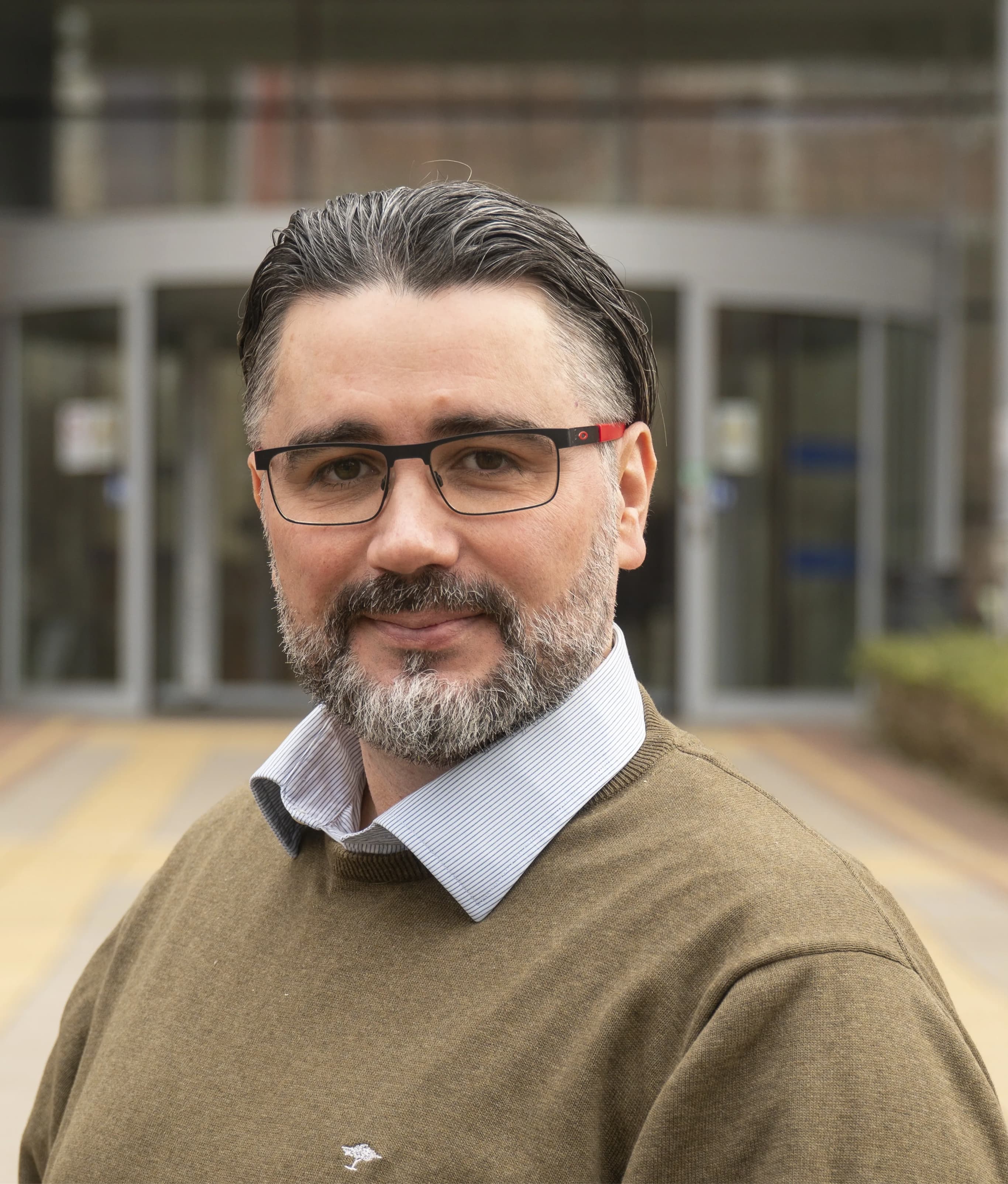
Dr. Sándor Spisák, Chief Scientific Officer and Co-founder of Curehub

Dr. Spisák is an internationally recognised molecular biologist specialising in epigenetics, gene regulation, functional genomics, and genome/epigenome editing.

He earned his PhD in Molecular Gastroenterology at Semmelweis University (Budapest), followed by:

– more than a decade of high-impact academic research in Boston,

including nearly 10 years at Harvard Medical School–affiliated institutes, most notably

the Dana-Farber Cancer Institute, where he worked as a postdoctoral researcher and later instructor.

Next to his involvement with Curehub he currently leads the Epigenetics & Genome Editing Research Group at HUN-REN TTK (Institute of Molecular Life Sciences), where his work focuses on uncovering the mechanistic foundations of epigenetic regulation and genetic variant function.

Academic & Scientific Highlights

Author of high-impact publications in Nature Medicine

→ CAUSEL methodology establishing causal links for non-coding GWAS variants

Read articles
Pioneer of DNA-methylation–based liquid biopsy approaches

→ Demonstrated non-invasive molecular signal detection from blood and urine samples

Read articles
Extensive experience with genome & epigenome editing, single-cell technologies, and functional genomics

→ Systems-level analysis of epigenetic regulation and variant function

Read articles
Recipient of elite competitive research funding

→ MTA Bolyai János Research Fellowship (nationally awarded on the basis of scientific excellence and independent research leadership)

Focus of the Epigenetics & Genome Editing Research Group

Identifying which genetic variants are truly causal, especially within non-coding regulatory regions

Experimentally testing how variants alter biological regulation using genome and epigenome editing combined with cell-based functional assays

Building mechanistic, systems-level understanding of epigenetic regulation relevant to complex biological pathways and long-term physiological outcomes

Integrating computational biology and high-resolution experimental data to move beyond correlations toward validated biological logic

At Curehub

he leads systems-level investigations into metabolism-linked epigenetic networks encompassing DNA, RNA, and histone methylation, and oversees high-throughput and targeted translational research programs. He also contributes to Research and Development as a Systems Biology Expert Validator.

This collaboration ensures that Curehub’s AI driven wellness insights are grounded in:

Causally validated biological mechanisms, not statistical associations alone

Systems-level epigenetic thinking, aligned with real-world biology

Scientific rigor suitable for long-term platform credibility and regulatory awareness

01AI · Data Science · Medical Image Analysis

Prof. Dr. András Hajdu

  • Dean of the Faculty of Informatics and Head of the Department of Data Science and Visualization, University of Debrecen
  • Full Professor of AI and Data Science
Portrait of Prof. Dr. András Hajdu

Prof. Dr. András Hajdu is Dean of the Faculty of Informatics and Head of the Department of Data Science and Visualization at the University of Debrecen. He has served as Head of Department since 2011, as a Full Professor since 2017, and as Dean since 2019.

He holds a PhD in Mathematics and Computer Science and completed postdoctoral research at the Artificial Intelligence Information Analysis Laboratory of Aristotle University of Thessaloniki. His principal research fields include data science, artificial intelligence, machine learning, deep learning, medical-image processing, and discrete mathematics.

His work combines theoretical expertise with the development of image-based technologies intended for real-world use. He has led or scientifically supervised research projects in automated cancer-cell recognition, endoscopic diagnostic technologies, machine-learning sensor networks, and computer-assisted diabetic-retinopathy screening. The cancer-cell recognition project under his scientific leadership received a national innovation award.

Prof. Hajdu has co-authored 74 scientific journal articles and approximately 120 conference publications. According to his CV, 16 of his journal articles are classified as D1/Q1 and a further 39 as Q1. His work has received more than 4,500 citations, with an H-index of 34.

His scientific standing is also reflected in his professional responsibilities. He served on the Board of the International Association for Pattern Recognition between 2015 and 2019 and was President of the Hungarian Association for Image Processing and Pattern Recognition during the same period.

He has been an IEEE Senior Member since 2015, an NVIDIA Certified Ambassador since 2021, and a board member of the AI Doctoral Academy's AI Educational Resource Committee.

He has acted as an expert evaluator for European research and innovation programmes, including Horizon 2020, the European Innovation Council, Marie Skłodowska-Curie Actions, and SME funding instruments. He also serves in editorial roles for scientific journals including Scientific Data, Infocommunications Journal, and Mathematics.

Selected credentials

  • 74 scientific journal articles and approx. 120 conference publications
  • 16 journal articles classified D1/Q1, a further 39 as Q1
  • More than 4,500 citations, H-index of 34
  • Board of the International Association for Pattern Recognition, 20152019
  • President of the Hungarian Association for Image Processing and Pattern Recognition, 20152019
  • IEEE Senior Member since 2015
  • NVIDIA Certified Ambassador since 2021
  • Expert evaluator for major European research and innovation programmes

Contribution to Curehub R&D

Prof. Hajdu's expertise strengthens the development and critical evaluation of image-based AI models. His background supports Curehub's work in medical-image analysis, representation learning, model validation, and the translation of advanced computational methods into research systems designed around clinically relevant questions.

02Systems Modelling · Mathematical Validation

Prof. Dr. Gábor Szederkényi, PhD, DSc

  • Full Professor, Faculty of Information Technology and Bionics, Pázmány Péter Catholic University
  • Head of the Roska Tamás Doctoral School of Sciences and Technology
  • Scientific Advisor, HUN-REN SZTAKI
Portrait of Prof. Dr. Gábor Szederkényi, PhD, DSc

Prof. Dr. Gábor Szederkényi has been a Full Professor at the Faculty of Information Technology and Bionics of Pázmány Péter Catholic University since 2013 and a scientific advisor at HUN-REN SZTAKI since 2014.

He holds a PhD in Information Science, a DSc in Engineering Sciences from the Hungarian Academy of Sciences, and a habilitation in Information Science. He has also worked as a visiting researcher at the Spanish National Research Council's Marine Research Institute in Vigo.

His research focuses on nonlinear dynamical systems, system identification, parameter estimation, identifiability analysis, network-structured models, and the computational analysis and synthesis of biological systems. A central part of his scientific work concerns kinetic and biochemical reaction networks: mathematical structures that make it possible to examine how complex systems behave, which parameters can be reliably determined, and whether different model structures can explain the same observed dynamics.

His main scientific contribution is a computational framework combining computer science, systems theory, graph structures, and optimisation for the analysis of kinetic models. This work has produced algorithms for identifying and comparing reaction-network structures capable of representing a given dynamic system.

Prof. Szederkényi has led and contributed to major national and international research programmes in nonlinear systems, biochemical reaction networks, process control, and network-structured dynamical systems. His international experience includes European Union FP7 research, bilateral scientific collaborations with Spanish and Slovenian institutions, and invited or plenary presentations at international conferences and research institutes.

He has served as an external reviewer for European Research Council Starting Grant proposals and as a research evaluator for scientific organisations in Austria, Slovenia, and Hungary. He was Secretary of the IEEE Hungary Section between 2010 and 2016 and has been a member of the IEEE Control Systems Society since 2007.

Since 2019, he has led the Roska Tamás Doctoral School of Sciences and Technology at Pázmány Péter Catholic University. His CV lists eleven completed doctoral researchers under his supervision or co-supervision, each graduating with summa cum laude distinction.

His scientific achievements have been recognised with several awards, including the Youth Award of the Hungarian Academy of Sciences and the Hungarian Order of Merit, Officer's Cross. The latter was awarded for internationally recognised scientific results in the analysis and control of nonlinear dynamical systems, including methods applicable to complex biological systems.

Selected credentials

  • PhD in Information Science and a DSc in Engineering Sciences from the Hungarian Academy of Sciences
  • External reviewer for European Research Council Starting Grant proposals
  • Has led the Roska Tamás Doctoral School of Sciences and Technology since 2019
  • Eleven completed doctoral researchers supervised or co-supervised, each graduating summa cum laude
  • Youth Award of the Hungarian Academy of Sciences and the Hungarian Order of Merit, Officer's Cross

Contribution to Curehub R&D

Prof. Szederkényi's expertise strengthens the mathematical foundation of Curehub's research. His work supports the development of transparent and testable model structures, including the examination of latent variables, biological relationships, identifiability, model stability, and reproducibility.

This perspective is essential when computational results must reflect coherent biological assumptions rather than statistical association alone.

03Ophthalmology · Retinal Imaging · Clinical Validation

Prof. Dr. Adrienne Csutak, MD, PhD, DSc, MSc

  • Full Professor and Clinical Director, Department of Ophthalmology, University of Pécs Clinical Centre
  • President of the Hungarian Ophthalmological Society
Portrait of Prof. Dr. Adrienne Csutak

Prof. Dr. Adrienne Csutak is a Full Professor and Director of the Department of Ophthalmology at the University of Pécs Clinical Centre. She has led the department since 2019, has held the rank of Full Professor since 2021, and has served as President of the Hungarian Ophthalmological Society since 2025.

She holds an MD, PhD, DSc, and an MSc in health-services management. She is a specialist in ophthalmology and ocular surgery, combining senior clinical leadership with extensive experience in research, innovation, medical education, and clinical validation.

Her clinical expertise spans corneal and external-eye disease, glaucoma, medical and surgical retina, cataract surgery, ocular diagnostics, laser treatment, and ophthalmic screening. Her documented surgical experience includes more than 10,000 phacoemulsification procedures, alongside extensive experience in glaucoma, corneal, oculoplastic, and retinal surgery.

Her specialist training includes programmes at Moorfields Eye Hospital in London and the European School for Advanced Studies in Ophthalmology, with advanced modules in medical retina, surgical retina, glaucoma, cataract and refractive surgery, and oculoplastic surgery.

Prof. Csutak has direct experience with the implementation of UK diabetic-retinopathy grading and screening methodologies, wide-angle scanning laser ophthalmoscopy, and the development of image-processing systems for diabetic-retinopathy screening. The DRSCREEN project in which she participated achieved first place in the 2010 Retinopathy Online Challenge.

Her scientific work includes ocular biomarkers, tear and ocular proteomics, diabetic ocular complications, retinal disease, inflammation, oxidative stress, wound healing, and the development of ophthalmic innovations. She has served as principal investigator in numerous multicentre Phase II and Phase III clinical trials covering retinal disease, glaucoma, ocular-surface conditions, and other ophthalmological indications.

She has held expert and reviewer roles for the European Commission and numerous scientific journals, including Experimental Eye Research, Acta Ophthalmologica, Graefe's Archive for Clinical and Experimental Ophthalmology, Ophthalmic Research, Journal of Proteomics, and Journal of Diabetes Research. Since 2026, she has served as an examiner for the European Board of Ophthalmology, and she leads an EBO-accredited ophthalmology training centre.

Her achievements have received major professional and national recognition. These include the Imre Blaskovics Award, one of the Hungarian Ophthalmological Society's most prestigious honours, and the Hungarian Order of Merit, Officer's Cross, awarded in 2024. Her research and innovation record also includes European, United States, and Hungarian patent activity, as well as a commercially licensed invention.

Selected credentials

  • MD, PhD, DSc, and an MSc in health-services management
  • More than 10,000 phacoemulsification procedures
  • Specialist training at Moorfields Eye Hospital London and the European School for Advanced Studies in Ophthalmology
  • Direct experience with UK diabetic-retinopathy grading and screening methodologies
  • DRSCREEN project achieved first place in the 2010 Retinopathy Online Challenge
  • Principal investigator in numerous multicentre Phase II and Phase III clinical trials
  • Expert and reviewer roles for the European Commission and numerous scientific journals
  • Examiner for the European Board of Ophthalmology since 2026
  • Imre Blaskovics Award and the Hungarian Order of Merit, Officer's Cross
  • European, United States and Hungarian patent activity plus a commercially licensed invention

Contribution to Curehub R&D

Prof. Csutak provides the clinical and ophthalmological foundation required for responsible retinal-imaging research.

Her expertise informs image-acquisition standards, clinically meaningful research questions, ophthalmic endpoint selection, artifact recognition, biological plausibility, and the design of clinical-validation pathways. This helps ensure that Curehub's research remains connected to the realities of ophthalmic imaging, patient care, and clinical decision-making.

04AI · Computer Vision · Synthetic Modelling

Dr. András Horváth, PhD

  • Associate Professor, Faculty of Information Technology and Bionics, Pázmány Péter Catholic University
  • Artificial Intelligence, Neural Networks and Computer Vision
Portrait of Dr. András Horváth

Dr. András Horváth is an Associate Professor at the Faculty of Information Technology and Bionics of Pázmány Péter Catholic University. His research focuses on computer vision and artificial intelligence, with particular emphasis on modern machine-learning algorithms, neural networks, image analysis, and their efficient implementation on emerging computing architectures.

He has participated in major international research programmes supported by organisations in the United States and the European Union. These include the DARPA UPSIDE programme, research supported by the United States Office of Naval Research, European innovation programmes, and Horizon Europe projects.

The DARPA UPSIDE programme examined unconventional computing approaches for intelligent data processing and object recognition. Dr. Horváth's participation in such programmes reflects experience with technically demanding international research conducted across artificial intelligence, computing architecture, and practical image-recognition systems.

He is the author or co-author of more than 75 peer-reviewed scientific publications presented in international journals and conference proceedings. He is a member of both the IEEE Circuits and Systems Society and the IEEE Computational Intelligence Society. Between 2022 and 2024, he served as the elected Chair of the IEEE Cellular Nanoscale Networks and Array Computing Technical Committee.

Alongside his academic work, Dr. Horváth has substantial industrial experience in applied artificial intelligence. At Eutecus, he contributed to the development of image-processing and AI-based systems, particularly for smart-city applications. Following Eutecus's acquisition by Verizon in 2016, he continued his work at Verizon as a Data Science and Machine Learning Fellow, contributing to the research and development of large-scale data-science and artificial-intelligence solutions.

His experience therefore spans both academic research and the implementation of AI systems intended to operate under real-world technical constraints.

Selected credentials

  • International research experience includes the DARPA UPSIDE programme
  • Research supported by the United States Office of Naval Research, European innovation programmes, and Horizon Europe projects
  • Author or co-author of more than 75 peer-reviewed scientific publications
  • Elected Chair of the IEEE Cellular Nanoscale Networks and Array Computing Technical Committee, 20222024
  • Substantial industrial experience in applied artificial intelligence
  • Continued at Verizon as a Data Science and Machine Learning Fellow following Eutecus's acquisition in 2016

Contribution to Curehub R&D

Within Curehub's research programme, Dr. Horváth is responsible for synthetic-data generation and its use in building machine-learning models.

His expertise supports representation learning, computer-vision pipelines, neural-network development, and controlled experimentation designed to determine whether AI models recover meaningful information rather than learning artificial shortcuts or dataset-specific artifacts.

Why This Matters

Scientific Confidence Is Built Through Independent Layers of Expertise

Curehub’s research is examined through several complementary scientific perspectives:

  1. Biological validity

    Molecular biology, epigenetics, functional genomics, and mechanistic interpretation.

  2. Clinical relevance

    Ophthalmology, retinal imaging, clinical research, screening, and real-world validation.

  3. Mathematical rigor

    Systems modelling, latent-variable design, identifiability, stability, and reproducibility.

  4. AI reliability

    Data science, computer vision, medical-image analysis, neural networks, and artifact control.

Biological validityClinical relevanceMathematical rigorAI reliability
Scientific confidence

This multidisciplinary structure helps us move beyond isolated correlations and build research programs in which biological assumptions, AI performance, and clinical meaning can be evaluated together.

CONTACT US

*Please choose whether you’re contacting us on behalf of a business or personally.

Where we’ll be replying from:Curehub Headquarters, Budapest, Hungary(GMT+2) Time zone